Decide Whether Removal Is The Right Action
An asbestos finding does not always mean immediate removal. Sound material that is unlikely to be disturbed may be managed in place following a suitable assessment. Removal becomes relevant where the material is damaged, cannot be protected effectively, or lies within the scope of refurbishment or demolition.
For Southampton commercial premises, start with the survey information and the intended use of the area. A removal quotation should identify the material, its extent and the reason for intervention. If the information is incomplete, further survey work may be needed before a contractor can prepare a meaningful plan.
Licensed And Non-Licensed Work
The Control of Asbestos Regulations 2012 distinguish licensable work, notifiable non-licensed work and other non-licensed work. The category depends on the material and the activity, including its condition and likely exposure. It cannot be selected simply because a job looks small or seems easy to reach.
Licensable work must be undertaken by a contractor holding the appropriate HSE licence. Other categories still need competent people, suitable training, risk assessment and controls. Ask the appointed contractor to explain the classification and any notification requirements before accepting the programme, rather than assuming every material follows the same route.
Prepare A Defined Removal Package
Give the contractor the survey, plans and proposed construction scope. Agree which materials will be removed and how the area will be separated from occupied space. A package should also identify access routes, waste movement, temporary arrangements and the handover evidence expected at completion.
Tell the provider about deliveries, neighbouring tenants, sensitive equipment and activities that cannot be shut down. These practical constraints can affect enclosure locations and the sequence of work. Do not promise other trades access to the removal zone until the contractor and, where required, the analyst have confirmed the correct release arrangements.
How Removal Is Organised
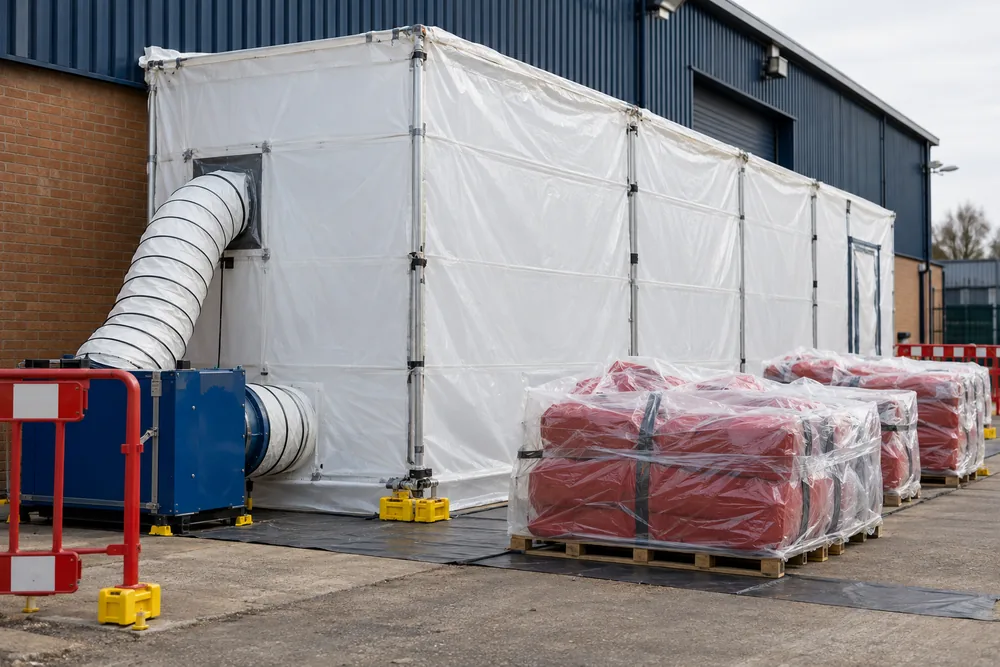
The contractor first develops the risk assessment and plan of work appropriate to the task. Site preparation then establishes the required separation, equipment and controls. The exact method varies by material and classification, so a website description should not be treated as instructions for your staff to remove asbestos.
Removal and cleaning are followed by the checks specified for that work. Where licensed enclosure work requires formal clearance, an appropriately accredited analyst has a separate role. Keep the building contact, contractor and analyst aligned so incomplete cleaning or unresolved access does not get passed to the next trade as somebody else's problem.
Disposal Is Part Of The Instruction
Asbestos waste needs suitable packaging, identification, controlled handling and an authorised disposal route. In England, check the waste carrier's registration and the receiving facility's permission to accept the waste. The correct records should follow the waste movement rather than being treated as an optional addition.
Ask who will retain the hazardous waste consignment documentation and where it will be filed. A removal invoice alone is not the same as a disposal record. Do not put suspect debris into general site skips or arrange transport in an ordinary works vehicle while the disposal route is being clarified.
Clearance And Return To Use
The completion arrangements depend on the work category and method. Licensed enclosure removal generally involves the four-stage clearance process and a certificate for reoccupation where applicable. Air testing is one element of the process and does not replace inspection of the work area.
Confirm the analyst's appointment early and allow for the possibility that cleaning needs more work before clearance can progress. After handover, update the register to show what was removed and what remains. Keep photographs, plans, waste records and the relevant clearance evidence together for future maintenance and project teams.
Pricing Removal At Southampton Premises
Removal costs vary with the product, condition, quantity, access, work category and isolation needed. Enclosures, specialist equipment, waste handling, analyst attendance and working hours can all affect the proposal. A restricted industrial site may involve different arrangements from an empty commercial unit with direct access.
For a Southampton removal quotation, establish who will arrange waste disposal and clearance, and whether repairs to the affected fabric are included. Replacement roof coverings or new finishes may belong to a separate construction package. Explain your target dates before procurement so notification requirements and the required safety sequence can be considered without inventing a guaranteed completion period.
What To Send With Your Enquiry
Provide the premises postcode, survey reference, material description and any relevant drawings. State whether the building is occupied and what work follows removal. If damage has already occurred, describe that clearly and keep people away from the affected location while seeking competent advice.
Our enquiry route helps define the commercial removal requirement and, with your agreement, connect it to a suitable local firm. Verify the appointed contractor's licence where required and agree the written scope before commissioning work. You can also request support with testing, project-specific surveys and the management records that follow the intervention.
The Process At A Glance
- Review survey evidence and confirm why removal is needed.
- Agree the work classification, contractor competence and written scope.
- Complete removal using the task-specific plan and authorised waste route.
- Obtain applicable clearance and disposal records, then update the register.
Technical references: HSE survey guidance, HSE provider guidance and Control of Asbestos Regulations 2012.
Your Questions, Answered
Does All Asbestos Removal Need A Licence?
Asbestos removal does not always require a licence, but the work category must be assessed correctly. The material, condition and activity determine whether it is licensable, notifiable non-licensed or non-licensed. Ask the contractor to explain the decision, and verify an HSE licence whenever the proposed work requires one.
What Disposal Records Should A Business Keep?
Asbestos disposal records should show the appropriate hazardous waste consignment documentation and the route taken by the waste. Confirm the carrier registration and the receiving facility before collection. Keep the records with the removal and building information so the dutyholder can demonstrate where the material went after it left the premises.